

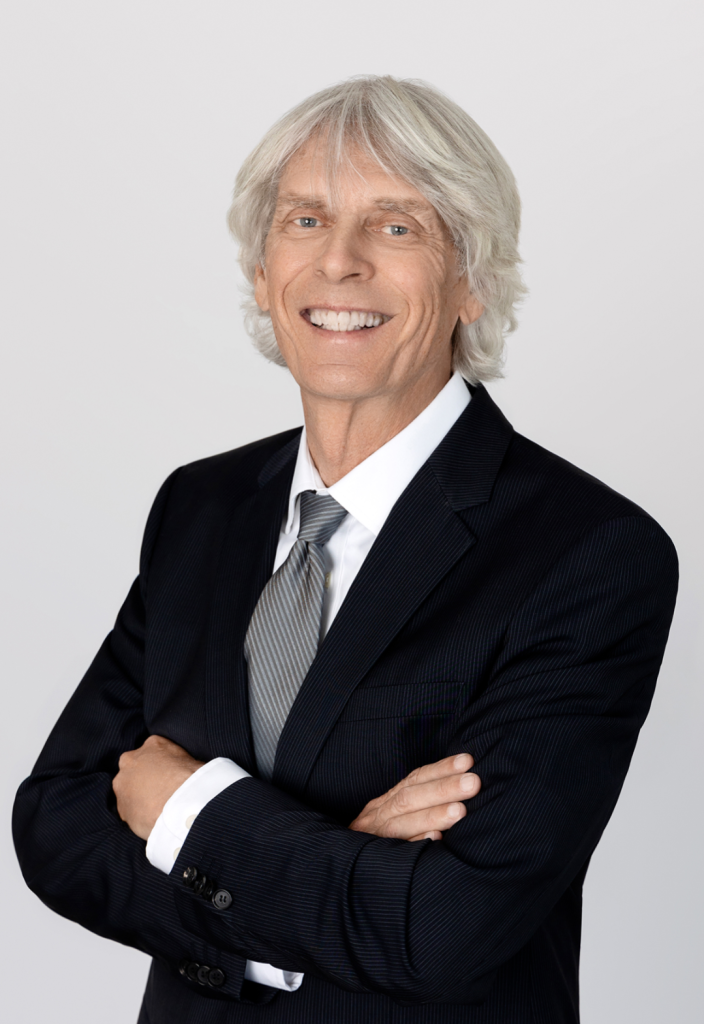
John Drinkwater’s impressive talents, education, and career are decades in-the-making: he writes, sings, and plays piano; achieved complex degrees in music, law, and business; also studied acoustics, physics, and architecture; and worked for some of Hollywood’s most successful establishments—like MGM/UA, ABC/Disney, CBS Records, Universal, Paradigm Talent Agency, SEE Entertainment, etc.—where he served in many roles, such as business attorney, Executive VP, Chief Operating Officer, and General Counsel, before splitting his time between business consulting and music composition and performance. He operates his firm, John Drinkwater Law, from Tucson, Arizona, where among many things, he helps people with disabilities understand, and advocates for, their rights under the Americans with Disabilities Act (ADA) and related federal and state laws, and writes about laws and policies relating to environmental noise.
His own encounters with ear-related disabilities encouraged John to champion for safety protocols in noisy environments combined with quiet options. J. D. Rider of Hyperacusis Central sat down with him recently to ask about these efforts, the laws and regulations of noise pollution and disability rights.
When describing noise safety concerns, or the threat which noise often brings in public dwelling spots, John calls it “secondhand sound,” like secondhand smoke, where people are subjected to unwanted irritants which pose a risk to health. In this case, the vital organs at risk are those which let them hear: the pea-sized cochleas. That noise poses such a threat is something sad and near and dear to the hearts of hyperacusis patients, along with those whose hearing loss and volatile tinnitus have left some lasting damage. Many wish they had been educated and warned of the dangers long before they happened, thereby preventing injury.
J. D.: Thanks for participating in this interview, John. I’d like to get started by asking you how noise became a focus of your career.
John: Thank you, J. D., for the work you do at Hyperacusis Central, and for the opportunity to share my experiences and insights with your readers. I majored in music as an undergraduate at the University of Illinois at Urbana-Champaign, followed by a JD/MBA that prepared me for an exciting and varied career in the entertainment industry in Los Angeles. Part of being a musician is training your ears to be sensitive and analyze sounds: pitch, timbre, and rhythm. Musicians also do “takedowns,” where you listen to recordings and write down each part. An engineering class in acoustics, along with studies in physics and architecture, helped me understand the science of sound, different frequencies and how they interact and reverberate. Everywhere I go I am aware of and analyzing the acoustic environment.
That’s wonderful when the sounds are pleasant and welcoming, but the other side is I never enjoyed noisy environments with unwanted sounds and poor acoustics. I didn’t think it was harmful, just unpleasant…until one day in 2009 when someone cupped their hands and spoke loudly in my ear. I instantly felt pain, and a sensation of fullness, in my ears. I acquired a severe case of hyperacusis, sound sensitivity, and soon thereafter heard ringing in my ears, tinnitus.
Sounds that used to be annoying were now loud, and sometimes painful. I then found the uninformed public is routinely exposed to unsafe levels of sound that can permanently damage their hearing, and that noise codes and environmental regulations were often ignored to the detriment of everyone’s health. If society adhered to those safe sound levels, even with my condition I could safely go to many places that were now inaccessible.
So to answer the question, I realized the combination of musical, scientific, and legal training, combined with personal experience, made me well suited to advocate for increased awareness of unsafe sound levels and increased access for the hearing disabled. I regularly write articles and “blawg” about these issues, that are available on my website johndrinkwaterlaw.com, and I’ll mention some of these throughout our interview, so readers can click on them and learn more details.
J. D.: I’m sorry you’ve had to endure these ear conditions, and I’m thankful for all the work you’re doing for disabled people. What efforts have you taken to educate society about the dangers of secondhand sound? And, tying into that, can you explain how your “Turn Up the Quiet™” initiative has resulted in widespread changes for private sector businesses and government institutions?
John: I started secondhand sound based on the secondhand smoke analogy. It was only in 1990 when San Luis Obispo became the first city in the world to have a comprehensive ban on smoking in public places. Although those protections are important for the general public’s health, they are especially important for people with asthma. The same is true for sound, those noise codes protect public health, but are especially important for those with hearing conditions.
One of the tenets of my advocacy is Americans have the right to choose their own level of risk, just like people have the right to smoke in private. However, that doesn’t extend to injuring others. Secondhand sound morphed into my current Turn Up the Quiet™ program designed to both educate and provide options for both those who “like it loud,” as well as those who want and/or need to protect their hearing. With advocacy the San Luis Obispo Jazz Festival became the first major festival to have a separate “quiet” area accessible to both the hearing disabled and others concerned about unsafe levels.
Furthermore, many businesses are establishing “sensory friendly” shopping hours to accommodate both disabled patrons and those who don’t like background music. I wish I could say the results were more widespread, but it usually starts with educating one business at a time. The local bank, restaurant, health club, gas station, grocery store, entertainment venue, etc. From there these efforts can result in changes at multiple locations.
J. D.: So for people concerned about secondhand sound, can you explain the different laws or regulations in place for America, including the EPA, ADA, noise codes, etc.? What rights do individuals have? And are these laws or regulations usually respected? For example, restaurants are often loud. I remember my last visit to a restaurant was almost like a club (this famous chain has a reputation for being loud, but thankfully I had earplugs inserted). Are these places sometimes skirting around these laws or regulations? In other words, are these sound safety laws or regulations usually enforced?
John: The short answer is no. Many of the laws have no teeth. Although mandated by statute, the EPA shuttered its Office of Noise Control over 40 years ago, leaving regulation to states who often have other priorities and are subject to the influence of lobbyists.
I covered many of the statutory and regulatory issues regarding environmental noise regulation in a three-part series based on litigation surrounding the Ford Amphitheater in Colorado Springs, CO: Outdoor Amphitheaters and Environmental Noise Policy, Nuisance, Noise and Outdoor Amphitheater Permits, and Inverse Condemnation and Outdoor Amphitheater Noise. Violations of noise codes are often misdemeanors with small fines, and are often unenforced. City councils are also subject to the influence of business interests who tout increased tax revenue and view public health noise restrictions as costs that reduce profits, to the detriment of nearby residents.
At restaurants and bars, some research has shown that people drink more when music is loud. People chew faster when tempos are sped up, and spend less time looking at the menu. Music Designer Wyatt Magnum says, “It gets louder and faster and causes people to eat and leave.” Restaurants get one additional “turn” at each table, increasing profits. Audiologist John Mayberry calls it the “weaponization” of sound. Earplugs have limited effectiveness, and are designed for work environments, not for places where people need to communicate like restaurants or retail shopping.
As noted, Occupational Safety and Health Administration regulations and noise codes are often unenforced, relegated to low priority without equipment to measure levels or staff to mandate compliance. Both employees and patrons suffer the consequences. The public has taken matters into its own hands with crowdsourcing apps like SoundPrint, where people can measure sound levels and share information on quieter locations.
The 1990 Americans with Disabilities Act, and related disability access laws such as the Architectural Barriers Act of 1968, and the Rehabilitation Act of 1973, are cornerstones of statutory protections, but they also have many shortcomings and exceptions that limit their effectiveness. For example, the ADA distinguishes between employees and patrons. Employees have more tools to encourage compliance, such as damages (where there are caps, unlike other civil rights laws), while patrons are limited to seeking injunctions with no damages. These ADA Damage Caps and Bans give the Disabled Rights without Effective Remedies. Further complicating matters are explicit and implicit bias.
In addition, recent Supreme Court decisions make it more difficult for successful plaintiff attorneys to get their fees paid by defendants. Some defendants attempt to run up costs for years, only to then agree to make changes just before a trial. It’s a fact of life that if businesses aren’t held accountable with damages and costs, they have less incentive to comply. That can also make it harder to get attorneys to represent plaintiffs. Some state disability laws include damages for both employees and patrons and address other shortcomings of the ADA, but it is inconsistent.
J. D.: So the lack of consistency leads to such disorder. That’s unfortunate. A safer sound environment would be amazing for the hearing disabled and society in general so people know the risks, as people’s lives are often subjected to loud environments. Other examples are concerts, nightclubs, and movie theaters. Generally they don’t provide sound warnings, do they? For movies, perhaps, maybe that’s because they don’t exceed what the EPA (the Environmental Protection Agency) considers damaging levels of noise. The safety guidelines mandated for employees by OSHA (Occupational Safety and Health Administration) and NIOSH (the National Institute for Occupational Safety and Health) differ, with OSHA being more liberal, and NIOSH being stricter, but the latter says the average person can expose to 85 decibels for eight hours in a given workday (called REL, or recommended exposure limit), 94 decibels for one hour, and 97 for 30 minutes. (Kardous, Themann, Morata, and Lotz, 2016) So a movie theater, which from my own experience stayed in the so-called “safe zone” (I clocked its peak at 95 decibels for a brief amount of time, seconds only, and it mostly hovered in the 70s and 80s regions for the bulk of the film; of course each theater and movie will be different, though), was probably okay for most individuals. However, concerts and nightclubs aren’t, reaching and maintaining levels well above 100 decibels, even 120, where short exposures are risky to a person’s ears. NIOSH says, for example, that you shouldn’t expose to 100 decibels for more than 20 minutes. These are guidelines applied to the workplace specifically, but what does that mean for businesses? Because concerts last hours, and people dance at clubs for hours oftentimes. So how do these businesses get away with that? Are there no set laws or regulations in place for situations such as these, and only guidelines/regulations for the workplace? Is going to a concert or club considered a “common sense” thing, where the people at risk should know they’re entering loud environments? Perhaps the current established setup thinks those people are responsible for themselves, when they’re customers rather than employees, that is, as is the case with someone’s personal choice to visit a concert or a club instead of working somewhere loud, you see? The reason I ask is because a lot of concert and nightclub dwellers end up on Hyperacusis Central’s patient stories, and they always say they wish these places had handed out earplugs or posted sound warnings, because then, they might have been spared of hearing damage.
John: That’s quite a question, J. D.! These are complex, multifaceted issues that are addressed in detail in my article “What is a Safe Level of Sound?” for the April issue of The Hearing Journal.
You are right that there are conflicting recommendations as to levels of noise, the public is uninformed, it is difficult to get accurate measurements, and some businesses weaponize sound for profit. Precision sound equipment is expensive, as is hiring qualified engineers to provide unbiased opinions for enforcement. Many places won’t allow individuals to get their own measurements.
Furthermore, often the recommendations assume an “acceptable” portion of the public will be permanently injured, and also assume one is in a quiet environment the other 16 hours of the day. The assumptions are false, so the recommended limits understate the risk. A recent BBC article quotes Dr. Maria Forsater who says, “The crucial number for heart health is 53 decibels and the higher you go the greater the health risks.” (Gallagher, 2025)
The Los Angeles City Noise Code requires warning signs at establishments if at any time amplified music exceeds 95 dBA, but I have never seen it enforced. Enforcing your rights is expensive, and often without compensation.
Although as noted above, I believe Americans have the right to choose the level of risk, and have safe alternatives. But if individuals can’t rely on established regulations how can they make informed decisions?
If employees and patrons aren’t given accurate information or alternatives, the only “safe” choice is to not participate in society, which can be very lonely and depressing. Unfortunately, that is what happens to many with severe hyperacusis and tinnitus…their lives are turned upside down and they are excluded from almost every aspect of society.
J. D.: Yes, it is very tragic what they go through. Very isolating. Another popular topic discussed among these sufferers relates to their rights as disabled citizens, and the common misconceptions that hyperacusis and tinnitus are not recognized by the Americans with Disabilities Act (ADA). In regards to this, can you explain what people’s rights are? How are they protected under the ADA and what employment possibilities or accommodations are ensured?
John: Well at this point you won’t be surprised I have written about these subjects. The Equal Employment Opportunity Commission specifically recognizes that Hyperacusis and Tinnitus are ADA Disabilities, and gives businesses guidance on how to accommodate employees. How to Make and ADA Accommodation Request provides tools to ask for help, and are effective for informed employers and businesses that recognize the value of, and want to honor their legal obligations to, disabled members of society.
Unfortunately the EEOC and DOJ don’t have the resources to fulfill their duty to hold businesses accountable, and nonprofits have far more viable cases than they can handle. Private attorneys can’t make their entire practice pro bono, and it’s becoming more difficult for successful plaintiffs who can afford to hire attorneys to get their legal costs reimbursed.
If businesses don’t want to comply, it can be very challenging, time consuming, expensive, and emotionally draining to enforce your rights.
That’s where things are today. My belief, along with many other hardworking, dedicated people, is that with continued advocacy in all these areas, and targeted national impact litigation, we can steadily move society towards a safer sound environment and increased disability access.
In conclusion, the struggle for civil rights, whether it be racial, religious, ethnic, sexual orientation, age, or disability, will never be accomplished in our lifetimes. Nevertheless, in the words of Dr. King, we all can help “bend the moral arc of the universe towards justice.”
J. D.: Very true and powerful. This has been a fascinating interview. Hyperacusis Central and I, along with our many followers, can’t thank you enough for all this information. If you would like to contact John, visit his website, johndrinkwaterlaw.com.
John: Thank you, J. D. It was a pleasure.
*AI (Artificial Intelligence) wasn’t used to write or edit this interview.
REFERENCES
[1]. Kardous, Chuck, Themann, Christa L., Morata, Thais C., and Lotz, W. Gregory. Understanding Noise Exposure Limits: Occupational vs. General Environmental Noise. NIOSH Science Blog. 2016. https://blogs.cdc.gov/niosh-science-blog/2016/02/08/noise/.
[2]. Drinkwater, John. What Is a Safe Sound Level? The Hearing Journal. 2025. https://journals.lww.com/thehearingjournal/fulltext/2025/04000/what_is_a_safe_sound_level_.2.aspx.
[3]. Gallagher, James. How our noisy world is seriously damaging our health. BBC. 2025. https://www.bbc.com/news/articles/crmjdm2m4yjo.
Thanks for explaining the current situation concerning noise in our daily lives. It’s unfortunate that most people do not understand the negative effects of noise on people’s lives. Both of you are aware of my wife Kathy’s situation concerning an exposure during an MRI. We have a long way to go in educating the public in the harms of noise exposure and having business owners taking responsibility for the noise that they generate. NEVER GIVE UP and we will make things better. Thanks again Gentlemen.
Great interview
Thanks, JD and John for excellent and very important information. Most folks never think about the danger of “secondhand noise”, which can be as detrimental to our health as secondhand smoke. I especially appreciate that the Equal Employment Opportunity Commission specifically recognizes that Hyperacusis and Tinnitus are ADA Disabilities, and gives businesses guidance on how to accommodate employees. It’s an important government agency that has done a lot for others with disabilities, so hopefully, in the future the EEOC will be able to help more with this. Again, I appreciate the information and will share with others.
Great interview and informative. It’s good to know us H folks have accommodations in the workplace.
Thank you John Drinkwater and J.D. Rider for addressing this issue on “second hand noise”. It’s sad that the people who often care most about this topic are those who have been hurt by noise.
Yet, I’m so thankful to find someone like Mr. Drinkwater advocating for things like quieter sound areas so that those with hearing disabilities can still enjoy parts of life.
I pray everyone will have a soft and open heart to this subject. I hope that awesome people like John will be able to make great strides with this topic in the future.
Thank you both from Haley Deyoe a Hyperacusis Loudness sufferer.
Thank you Jerad and John for a very informative interview! We are thankful for your honesty and concerns for a battle hard to win. People are unaware of many of the things you brought to light in this interview. Please keep fighting the battle and keep letting everyone know what is going on and what we can do to help.
Wow, it seems like a subject matter that a lot of people are unfamiliar with, and yet there is a lot to think about when it comes to it. One of the things I personally never cared for was the loud fire alarms in school that when they went off and you were near them they sent quite the jolt that didn’t feel right. It seemed like they were too loud for the ear. I had no idea that action was been taken in this realm so this was quite the revelation. Thanks for sharing the information.
Hey I know thyis is off topic butt I was wondering if yyou knmew of
any widgets I could add to my blog that automatically tweet my newest twitter
updates.I’ve been looking for a plug-in like this forr quite some
timke and was hoping maybe you would have some experience with something like this.
Please let me know if you run into anything. I truly enjoy reading your blog and I look forward to your new updates. http://boyarka-Inform.com/